✓ California nonprofits must file annual reports with multiple state agencies and the IRS.
✓ Key state agencies include the Secretary of State, Attorney General, and Franchise Tax Board.
✓ Federal Form 990 series is a crucial IRS requirement for most nonprofits.
✓ Missing deadlines can lead to penalties, loss of tax-exempt status, and dissolution.
How It Works
1
Understand Your Obligations
Identify which state and federal agencies your nonprofit needs to report to based on its activities and revenue. This initial assessment is critical for accurate and timely filing.
2
Gather Necessary Documentation
Collect all financial statements, board meeting minutes, program activity reports, and other relevant data. Having organized records streamlines the entire reporting process.
3
Complete and Review Forms
Carefully fill out each required form, such as Form 990, Form RRF-1, and SI-100, ensuring all information is accurate and consistent. A thorough review prevents errors and potential issues.
4
Submit and Confirm
Submit your completed reports to the respective agencies before their deadlines, retaining copies for your records. Confirm receipt to ensure your filing was successful and complete.
Navigating the Complexities of California Nonprofit Annual Report Filing
Photo: Kindel Media / Pexels
For any nonprofit operating in California, understanding and meticulously executing the annual report filing process is not merely a bureaucratic chore; it's a fundamental pillar of maintaining legal standing, public trust, and tax-exempt status. The Golden State, known for its stringent regulatory environment, imposes specific and often multi-layered reporting requirements that extend beyond the federal obligations set by the Internal Revenue Service (IRS). Failing to meet these requirements can lead to severe consequences, including fines, suspension of corporate status, loss of tax exemption, and even involuntary dissolution. This comprehensive guide aims to demystify the California nonprofit annual report filing landscape, offering a clear roadmap for compliance.
At its core, the annual report filing serves several critical purposes. Firstly, it provides transparency to the public and regulatory bodies about the nonprofit's financial health, governance practices, and programmatic activities. This transparency is vital for donors, grantmakers, and beneficiaries who rely on accurate information to make informed decisions. Secondly, it ensures accountability, demonstrating that the organization is adhering to its stated mission and utilizing its resources responsibly. Finally, for the nonprofit itself, the process of preparing these reports can be an invaluable exercise in self-assessment, prompting a review of financial controls, operational efficiency, and strategic direction. Many organizations view this as an opportunity to refine their internal processes and strengthen their overall impact.
California's regulatory framework for nonprofits involves multiple state agencies, each with its own set of forms, deadlines, and requirements. The primary players include the California Secretary of State (SOS), the California Attorney General's Office (AG), and the California Franchise Tax Board (FTB). Each of these entities plays a distinct role in overseeing nonprofit operations, from corporate registration to charitable solicitation and tax compliance. Understanding the specific mandate of each agency and how their requirements interlink is the first step towards a successful and stress-free filing season. For instance, while the SOS is concerned with the corporate existence and basic organizational information, the AG focuses on the proper use of charitable assets and prevention of fraud, and the FTB handles state income tax exemption and reporting. It's a complex ecosystem, and a misstep with one agency can often trigger issues with another. Therefore, a holistic approach, considering all requirements simultaneously, is highly recommended. Many nonprofits find it beneficial to create a compliance calendar to track all deadlines throughout the year. This proactive approach can significantly reduce stress and the likelihood of missing crucial filing dates. Furthermore, engaging with professional advisors, such as attorneys or accountants specializing in nonprofit law, can provide invaluable guidance, especially for organizations with complex structures or significant revenue. They can help interpret nuanced regulations and ensure all filings are accurate and complete, safeguarding the organization's future. For more general information on nonprofit governance, consider exploring resources on nonprofit board responsibilities.
Key State Agencies and Their Reporting Requirements for CA Nonprofits
Photo: Kindel Media / Pexels
Successfully navigating your California nonprofit annual report filing demands a clear understanding of the specific forms and deadlines mandated by the state's key regulatory bodies. Each agency plays a distinct role in ensuring the integrity and accountability of the nonprofit sector. Let's break down the requirements for the California Secretary of State (SOS), the Attorney General's Office (AG), and the Franchise Tax Board (FTB).
First, the California Secretary of State (SOS) is primarily concerned with the corporate existence of your nonprofit. All incorporated nonprofits in California, whether public benefit, religious, or mutual benefit corporations, must file a Statement of Information (Form SI-100 or SI-100B, depending on the type) every two years. This form updates the state with essential information about your organization, including its principal office address, the names and addresses of its directors and officers, and the name and address of its agent for service of process. The filing fee is typically $20. The due date is usually within 90 days after the filing of the original Articles of Incorporation, and then every two years thereafter, based on the month of original incorporation. It's crucial to file this on time, as failure to do so can lead to suspension of corporate status, which can then impact your ability to file with other state agencies and even open bank accounts. The SOS also handles the initial incorporation process, so they are the first point of contact for any new nonprofit.
Next, the California Attorney General's Office (AG) oversees charitable solicitations and the proper use of charitable assets. Most public benefit corporations and charitable trusts that solicit or hold charitable assets in California must register with the AG's Registry of Charitable Trusts and file an annual report. The primary form for this is the Annual Registration Renewal Fee Report to Attorney General (Form RRF-1). This form is typically due four months and fifteen days after the close of your fiscal year, aligning with the federal Form 990 deadline. Along with Form RRF-1, you generally must submit a copy of your federal Form 990 (or 990-EZ, 990-PF, etc.) and your financial statements. The filing fee for Form RRF-1 is based on your gross annual revenue, ranging from $0 for organizations with less than $50,000 in revenue to $1,200 for those with over $10 million. The AG's office is particularly vigilant about ensuring that charitable funds are used for their intended purposes and that board members are fulfilling their fiduciary duties. They also require reporting on any significant changes to the organization's structure or purpose. Failure to file with the AG can result in significant penalties, including late fees, loss of tax-exempt status, and even legal action.
Finally, the California Franchise Tax Board (FTB) is responsible for state income tax exemption and reporting. While federal tax-exempt status is granted by the IRS, California nonprofits must also apply for and maintain state tax exemption with the FTB. Most tax-exempt organizations in California are required to file an annual information return with the FTB, typically using FTB Form 199, California Exempt Organization Annual Information Return. This form is generally due on the 15th day of the 5th month after the close of your fiscal year. If your organization is also required to file a federal Form 990-T (Exempt Organization Business Income Tax Return) because it has unrelated business taxable income (UBTI), then it must also file FTB Form 109, California Exempt Organization Business Income Tax Return. The FTB ensures that nonprofits are complying with state tax laws and that their activities align with their tax-exempt purpose. It's important to note that even if your organization has no income or very little income, you might still be required to file these forms. The FTB will also assess penalties for late filings or non-filing, which can accumulate quickly. Understanding these distinct but interconnected requirements is paramount to maintaining good standing and avoiding compliance pitfalls in California.
Federal Form 990 Series: Your IRS Annual Information Return
Beyond the specific state requirements for your California nonprofit annual report filing, every tax-exempt organization recognized by the IRS under Section 501(c)(3) (and most other 501(c) organizations) must file an annual information return with the Internal Revenue Service. This is typically accomplished through the Form 990 series, a critical document that provides the IRS and the public with a detailed overview of the nonprofit's finances, governance, and programs. The specific form your organization needs to file depends primarily on its gross receipts and total assets.
The most common forms in the 990 series include:
* **Form 990-N (e-Postcard):** This is the simplest form, designed for small organizations with gross receipts normally $50,000 or less. It's an electronic-only filing that requires only a few basic pieces of information, such as the organization's legal name, address, and EIN. Many new or very small nonprofits will start with this filing.
* **Form 990-EZ:** This is for organizations with gross receipts less than $200,000 and total assets less than $500,000. It's a more detailed form than the 990-N but less comprehensive than the full Form 990. It requires information on revenue, expenses, assets, liabilities, and program service accomplishments.
* **Form 990:** This is the full information return required for organizations with gross receipts of $200,000 or more or total assets of $500,000 or more. This form is extensive, covering detailed financial information, governance policies, compensation of officers and key employees, and information about program services. It also includes various schedules (A through O) that provide additional details on specific aspects of the organization, such as public charity status, compensation, fundraising events, and related organizations.
* **Form 990-PF:** This form is specifically for private foundations, regardless of their financial size. Private foundations have different operational rules and reporting requirements than public charities, and the 990-PF reflects these distinctions.
* **Form 990-T:** This form is filed by tax-exempt organizations that have $1,000 or more of gross income from an unrelated trade or business (Unrelated Business Taxable Income, or UBTI). Even if an organization is generally tax-exempt, income from activities not substantially related to its exempt purpose may be taxable.
The filing deadline for all forms in the 990 series is the 15th day of the 5th month after your organization's fiscal year ends. For example, if your fiscal year ends on December 31st, your Form 990 is due by May 15th of the following year. An automatic six-month extension can be requested using Form 8868, but this only extends the time to file, not the time to pay any taxes due (such as UBTI). It's important to remember that the IRS requires these forms to be filed annually, and failure to file for three consecutive years can result in the automatic revocation of your organization's tax-exempt status. This is a severe consequence that can be costly and time-consuming to reverse. Furthermore, the information on most Form 990s (excluding 990-N) is publicly available, which means donors, grantmakers, and the general public can review your financial and operational data. This public transparency underscores the importance of accuracy and completeness in your filings. Understanding the nuances of the 990 series is a critical component of maintaining your nonprofit's good standing at the federal level, complementing your California nonprofit annual report filing obligations. For further details on maintaining your tax-exempt status, consider reviewing resources on nonprofit tax compliance.
Common Pitfalls and Best Practices for California Nonprofit Annual Report Filing
Even with a clear understanding of the requirements, the California nonprofit annual report filing process can present challenges. Being aware of common pitfalls and implementing best practices can significantly reduce stress and ensure ongoing compliance.
**Common Pitfalls to Avoid:**
* **Missing Deadlines:** This is arguably the most common and easily avoidable mistake. Each agency (SOS, AG, FTB, IRS) has its own specific deadlines. Missing them can lead to late fees, penalties, and even suspension or revocation of status. Create a comprehensive compliance calendar and set multiple reminders.
* **Inconsistent Information Across Filings:** Submitting conflicting data to different agencies (e.g., different board member lists to the SOS and AG, or inconsistent financial figures between Form 990 and Form RRF-1) can raise red flags and trigger audits or requests for clarification. Ensure all data is reconciled before submission.
* **Ignoring Unrelated Business Income (UBI):** Many nonprofits engage in activities that generate income but are not directly related to their exempt purpose. Failing to identify and report this Unrelated Business Taxable Income (UBTI) on Form 990-T and FTB Form 109 can lead to significant tax liabilities and penalties.
* **Neglecting Board Member Updates:** The Statement of Information (SI-100) requires current director and officer information. If your board changes throughout the year, ensure these updates are reflected in your biennial filing. Outdated information can lead to corporate suspension.
* **Underestimating the Complexity of Form 990:** For organizations filing the full Form 990, the document is extensive and requires detailed financial and governance information. Attempting to complete it without adequate accounting knowledge or professional assistance can lead to errors and omissions.
* **Lack of Proper Record-Keeping:** Accurate and organized financial records, meeting minutes, and program reports are essential for completing all annual filings. Disorganized records make the process arduous and prone to errors.
**Best Practices for Seamless Filing:**
* **Create a Centralized Compliance Calendar:** List all state and federal filing deadlines, including extensions, for each fiscal year. Assign responsibility for each filing.
* **Maintain Meticulous Records:** Implement robust accounting software and document management systems. Keep all financial statements, bank reconciliations, board minutes, and program activity reports readily accessible.
* **Reconcile Data Annually:** Before preparing any annual reports, reconcile all financial data and ensure consistency across all internal records. This makes external reporting much smoother.
* **Utilize Professional Assistance:** Consider engaging a qualified nonprofit accountant or attorney to prepare or review your annual reports, especially the Form 990 and Form RRF-1. Their expertise can save time, prevent costly errors, and ensure compliance.
* **Regularly Review Governance Policies:** Ensure your organization's governance policies (e.g., conflict of interest, whistleblower policy, document retention) are up-to-date and being followed. These are often questions on the Form 990.
* **Stay Informed of Regulatory Changes:** Nonprofit regulations, both state and federal, can change. Subscribe to newsletters from the IRS, California AG, and other relevant bodies to stay abreast of any updates.
* **Plan for Filing Fees:** Budget for the various filing fees associated with the SOS, AG, and any potential tax payments (e.g., UBTI). These are legitimate operational expenses.
By proactively addressing these common pitfalls and adopting these best practices, your California nonprofit can navigate its annual report filing obligations with confidence, ensuring its continued legal standing and ability to fulfill its mission.
Comparison
Requirement
IRS (Federal)
CA Attorney General
CA Secretary of State
CA Franchise Tax Board
Primary Form(s)
Form 990, 990-EZ, 990-N, 990-PF
Form RRF-1
Form SI-100 (or SI-100B)
FTB Form 199, FTB Form 109
Filing Frequency
Annually
Annually
Biennially (every 2 years)
Annually
Typical Due Date
15th day of 5th month after FYE
15th day of 5th month after FYE
Biennially, 90 days after incorporation month
15th day of 5th month after FYE
Purpose
Tax-exempt status, public transparency
Charitable asset oversight, solicitation
Corporate existence, director info
State tax exemption, state income tax
Penalties for Non-Compliance
Fines, revocation of tax-exempt status
Fines, loss of tax-exempt status, legal action
Corporate suspension, dissolution
Fines, loss of tax-exempt status
What Readers Say
★★★★★
"This guide broke down the California nonprofit annual report filing process into understandable steps. We used to dread filing season, but with this resource, we felt much more confident and completed everything on time."
Sarah Chen · Los Angeles, CA
★★★★★
"The details on the different state agencies and their forms were incredibly helpful. It clarified which forms our organization needed for our California nonprofit annual report filing, saving us a lot of research time."
David Ramirez · San Francisco, CA
★★★★★
"Thanks to this article, we avoided a late filing penalty with the Attorney General's office. The emphasis on deadlines and specific forms for California nonprofit annual report filing was a lifesaver."
Maria Garcia · San Diego, CA
★★★★★
"While comprehensive, a few more real-world examples of how different revenue levels impact Form 990 choice would be beneficial. Still, an excellent resource for California nonprofit annual report filing."
John Smith · Oakland, CA
★★★★★
"As a new nonprofit, the 'Common Pitfalls' section was invaluable. It helped us set up our internal processes correctly from the start for our California nonprofit annual report filing, preventing future headaches."
Emily White · Sacramento, CA
Frequently Asked Questions
What are the primary state agencies I need to report to for my California nonprofit annual report filing?
For your California nonprofit annual report filing, you'll primarily interact with the California Secretary of State (SOS) for corporate status, the California Attorney General's Office (AG) for charitable trust registration, and the California Franchise Tax Board (FTB) for state tax exemption and income reporting. Each has distinct forms and deadlines.
I'm worried about missing a deadline for my California nonprofit annual report filing. How can I avoid this?
To avoid missing deadlines for your California nonprofit annual report filing, create a detailed compliance calendar that includes all federal and state due dates. Set multiple reminders, consider using an automated system, and if possible, work with a professional who specializes in nonprofit compliance to help track these dates.
How do I determine which federal Form 990 my California nonprofit needs to file?
The federal Form 990 your California nonprofit needs to file depends on its gross receipts and total assets. Generally, organizations with gross receipts of $50,000 or less file Form 990-N; those with less than $200,000 in receipts and $500,000 in assets file Form 990-EZ; and larger organizations file the full Form 990.
Is there a cost associated with the California nonprofit annual report filing?
Yes, there are typically costs associated with the California nonprofit annual report filing. The Secretary of State charges a fee for the Statement of Information (SI-100), and the Attorney General's Form RRF-1 has a fee based on your organization's gross annual revenue. There are generally no direct filing fees for federal Form 990, but professional preparation services will incur costs.
How does California's annual report filing differ from other states?
California's annual report filing is often considered more complex than many other states due to its multi-agency approach. Unlike some states that consolidate reporting, California requires separate filings with the Secretary of State, Attorney General, and Franchise Tax Board, each with distinct forms, deadlines, and oversight areas, in addition to federal IRS requirements.
Who within my nonprofit should be responsible for the California nonprofit annual report filing?
Ideally, a member of your finance team or an executive director with strong organizational skills should oversee the California nonprofit annual report filing process. However, it's crucial that the board of directors ultimately reviews and approves the filings, ensuring accuracy and compliance, and that a qualified accountant or legal professional is involved in preparation or review.
What happens if my nonprofit loses its tax-exempt status due to non-compliance with California nonprofit annual report filing?
If your nonprofit loses its tax-exempt status due to non-compliance with California nonprofit annual report filing, it can face severe consequences. These include being treated as a taxable entity, losing eligibility for grants and tax-deductible donations, and potentially incurring significant penalties and interest. Reinstatement is a complex and often costly process.
Are there any upcoming changes to the California nonprofit annual report filing requirements I should be aware of?
Regulatory environments are dynamic. While specific upcoming changes are best monitored through official state and federal channels, it's always wise to subscribe to updates from the California Attorney General, Secretary of State, Franchise Tax Board, and the IRS. Staying informed ensures your California nonprofit annual report filing remains compliant with the latest regulations.
Don't let the complexities of California nonprofit annual report filing overwhelm your mission. Leverage this comprehensive guide to ensure your organization remains compliant, transparent, and focused on making a difference. Take control of your filings today and secure your nonprofit's future.

 Photo: Kindel Media / Pexels
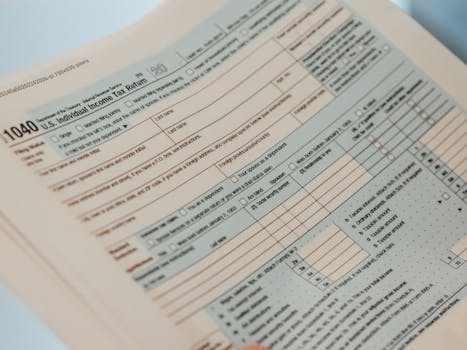 Photo: Kindel Media / Pexels